

I enjoy to handle a few things at once when I’m gaming online https://parimatchscasino.com/. Maybe I’m in the middle of a blackjack hand with a live dealer, but I also want to see the bonus round on my favorite slot or see how a sports bet is playing out. That’s when having multiple tabs open ceases to be a convenience and starts feeling essential. It turns your browser into a proper control desk. So I gave Parimatch Casino for a proper spin from here in Australia, with one main question in mind: how does it stand up when you’re running several games at the same time? For a few weeks, I applied the pressure to determine if using tabs meant sacrificing stability, speed, or just the general feel of the site.
How Multi-Tab Gaming Counts to Me
Some players don’t think about it much, but for me, multi-tabbing is key to how I play. It’s about maximizing of my free time. I could be looking at a new slot review in one tab, have a slow-burn roulette table open in another, and monitor a live tennis bet in a third. If the casino platform fails at that, the whole setup collapses. Tabs lock up, sounds from different games blend, or a single crash takes everything down with it. How well a site deals with this kind of parallel play reveals a lot about the tech behind it. I wanted to find out if Parimatch, with its huge selection of games and live tables, was built for this kind of multitasking without driving me up the wall.
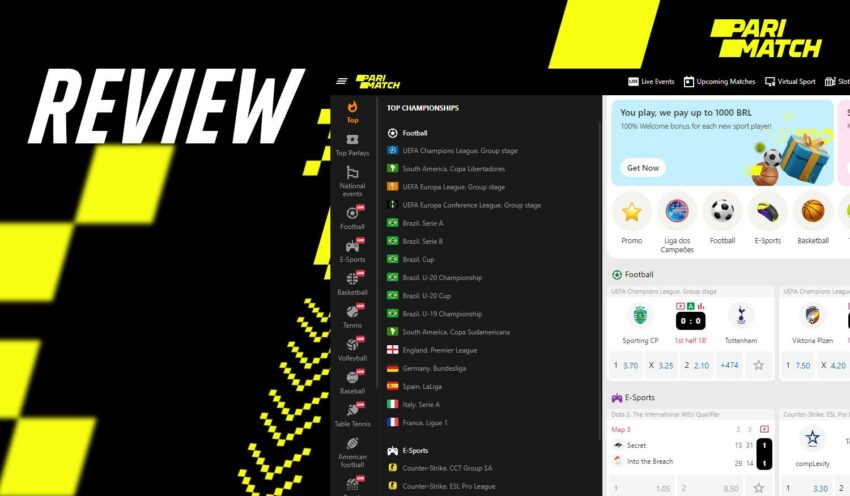
The other option—fiddling with separate browser windows or closing one game to open another—just kills the mood. Smooth tab switching lets you move between different gaming vibes without a hiccup. And in Australia, where your internet can be good in the city and spotty out bush, a site’s efficiency really matters. A good platform should work reliably on a decent broadband or 4G connection, not just on a top-tier fibre line. That way, playing across multiple tabs isn’t just a method for people with the fastest internet.
First Impressions and Performance Performance
I began simply. I loaded the Parimatch homepage and opened “Book of Dead” in one tab. It appeared fast, under five seconds. Then I launched a second tab straight to a Live Lightning Roulette table. Here’s the first noteworthy bit: that second tab opened almost as quickly as the first. It felt like the site was caching its core elements smartly. Starting a third tab to something like Dream Catcher maintained this trend continuing. For the first three tabs, whether slots or live games, the initial load times were consistently quick.
Things shifted a little when I moved to four and five tabs, each with a demanding game (a Megaways slot, two live dealers, and a virtual football match). The fourth and fifth tabs needed a bit longer to become fully ready, about 7 to 10 seconds. It indicated me that while Parimatch’s setup can manage several games at once, there’s a point where your own system and their servers have a brief chat that causes a delay. The good news is that once everything was set, the tabs held solid. I didn’t see “loading creep,” where older tabs start to lag as new ones open. That’s a common problem on less refined sites, and Parimatch sidestepped it.
Audio Handling and Inter-Tab Disruption
Handling audio properly is a big deal for playing across tabs, and a lot of sites fail at it. Nothing is more annoying than the noise from a slot machine drowning out a blackjack dealer’s voice. I gave this careful consideration. Parimatch Casino offers audio control for each tab. Each game has its own mute button directly in the interface. Better still, the browser keeps the audio streams separate. If I concentrated on one tab, the others kept playing their sound, but muting individual tabs or utilizing the browser’s master mute provided me with full command.
I never heard cross-talk or distorted sound, even with three live dealer tables operating at the same time, each with its own commentator. That indicates to me their game providers and the Parimatch system are using the web audio tools properly. A minor detail I appreciated was that when I switched tabs, the sound from the background ones remained at a steady volume without skipping. It meant I could, for instance, follow the dealer chat as background noise while primarily playing a slot in another tab, which produced a nice casino ambience. The only catch is a general browser one: you cannot route different audio streams to different speakers. That’s a limitation Parimatch can fix.
Consistency and Resource Management Under Load
This was the true test. Could Parimatch ensure everything running without issues once all my tabs were active? For the bulk, yes. With five distinct games active, I moved between them regularly, activating spins, setting live bets, and engaging with multiple interfaces. The consistency was notable. I didn’t have a single browser tab fail during my primary tests on the fibre connection. Every tab functioned like its own distinct world, which is just what you need. Games didn’t reset, my balance changed properly everywhere, and I wasn’t logged out of the whole site because one tab lagged.
Resource handling was similarly impressive. A look at Chrome’s task manager revealed each game tab consuming a reasonable chunk of memory and CPU, which is typical for modern HTML5 games with high-quality graphics and live video. The key part was separation. If one tab had a moment—like when I tested to stress it by rapidly pressing the bet button on a slot—it didn’t spill over and affect the speed of the others. On the 4G connection, the behavior hinged more on the network than Parimatch’s code. If the signal dipped, the live video would stutter, but slot animations would stop momentarily and continue again when the connection stabilized, without crashing. That kind of clean isolation demonstrates some impressive software work under the hood.
My Testing Framework and Method
I intended my tests to be impartial and repeatable, so I held my setup consistent. I utilized a mid-range Windows 11 laptop with 16GB of RAM and a dedicated graphics card—fairly standard, fairly common for a lot of gamers. I tested everything on the latest version of Google Chrome. I evaluated on two connections: my stable home fibre (about 95 Mbps down) and a 4G mobile hotspot, to simulate more average conditions. I also played at different times, including busy evenings, to check if server load altered anything.
My approach was to progressively add more pressure. I’d start with two tabs: for instance the graphic-heavy slot “Gonzo’s Quest” and a live dealer table. Then I’d introduce a third tab with a different live game, a fourth with a virtual sports match, and a fifth with the main casino lobby or my account page. For each step, I watched a few things: how long tabs required to load, how swiftly they responded to clicks (like hitting spin or placing a bet), whether audio stayed clear and separate, how much memory Chrome was using, and—most importantly—if anything stalled, crashed, or began lagging badly. I maintained each combination running for at least half an hour of actual play.
Smartphone vs. Desktop Multiple Tab Experience
Because so many people gamble on phones, I attempted this on an Android device too. On mobile, the idea of “tabs” shifts. Utilizing the Parimatch site in Chrome on Android is more about multiple browser windows. The phone deals with that well enough. Performance was better than I anticipated; I could run a slot in one window and a live game in another, switching between them smoothly. But if I tried to keep more than two heavy sessions active, the mobile browser sometimes restarted a window when I switched back to it, because it needs to free up memory.
The official Parimatch app uses a different, smarter approach. You do not have classic tabs. Instead, if you move away from a live game or slot to the lobby, your session halts in the background. Getting back into it is almost instant. It’s not multi-tabbing like on a desktop, but it gets you to the same place: you can change contexts without a fuss. The app appeared even more tuned for managing resources than the mobile browser. If you’re mainly a phone player, the app offers you a better, more stable way to hop between games, even if the screen is smaller. For true parallel play—observing and playing with several things at once—the desktop browser is still the best instrument for the job.
Drawbacks and Considerations for Power Users
My time was largely great, but nothing is flawless. I noticed a couple of aspects for serious players like me to keep in mind. The biggest factor isn’t really Parimatch’s doing—it’s your own hardware. Your computer’s RAM and processor make a difference. Parimatch’s windows are stable, but each live dealer session with HD video consumes power. On a machine with merely 8GB of RAM, running three live tabs plus a modern slot will likely stress the system, possibly leading to the fans ramp up and the overall system lag. It might not crash, but it affects the overall impression. Keep your own specs in mind.
I also observed a particular point about bonus wagering. If you’re playing with an current bonus that has conditions, be aware that your activity in every single tab applies toward it. That’s convenient, but it implies you must keep a rough tally of your total bets across all your sessions so you won’t inadvertently violate the bonus terms. Also, while the cashier and balance refreshes were dependable, I noticed a tiny lag—a few seconds—for a significant win in one tab to reflect in the balance on the other tabs. It’s a small detail, but you feel it when you’re checking your funds rapidly. And for the absolute hardcore user dreaming of 8+ tabs, the browser itself will probably reach its limit before Parimatch gives out. Requiring any home computer to run that many resource-intensive game windows is a significant demand.