
Clinical Insights by Prof. Dr. Serdar Kabataş, MD, PhD (C)
Multiple sclerosis almost never begins with certainty.
To understand where regenerative therapy may have a role in multiple sclerosis, it is first essential to understand how the disease itself behaves and progresses.
A Personal Perspective from a Neurosurgeon and Stem Cell & Immunology Specialist
I am Prof. Dr. Serdar Kabataş.
I have been working with diseases of the central nervous system for many years, and multiple sclerosis is one of the conditions that rarely behaves the way patients expect it to.
Not because it is mysterious, but because it unfolds slowly. Often quietly. Sometimes in ways that are difficult to explain in a single consultation.
What makes Multiple Sclerosis particularly challenging is not only the inflammation or the lesions seen on MRI. It is the long time span in which patients live with uncertainty — between phases that feel active and phases that appear stable, without ever being quite sure what is really happening inside the nervous system.
Over the years, I have met many patients who were less concerned about the diagnosis itself than about one simple question: Is there still something that can be influenced?
This is usually the point where regenerative approaches enter the discussion. Stem cells. Exosomes. Biological support therapies. Often accompanied by hope, and just as often by confusion.
My responsibility, first and foremost, is not to offer another option, but to place these approaches into a neurological context – to explain where they may have a role, and where they clearly do not.
This article is written with that intention.
- Not to promise improvement.
- Not to suggest replacement of established MS therapies.
- But to explain, calmly and honestly, when regenerative medicine may still make biological sense in multiple sclerosis – and when it no longer does.
Because in Multiple Sclerosis, more than in many other neurological diseases, timing is not a detail.
It is the deciding factor.
Table of Contents
- Understanding MS – Multiple Sclerosis – and the Role of Regenerative Therapy for Patients
- A Personal Perspective from a Neurosurgeon and Stem Cell & Immunology Specialist
- Multiple Sclerosis Is Not One Disease, but a Spectrum of Course
- Relapsing-Remitting Multiple Sclerosis: The Phase Where Inflammation Dominates
- Secondary Progressive Multiple Sclerosis: When Damage Becomes Less Reversible
- Primary Progressive Multiple Sclerosis: A Fundamentally Different Disease Course
- Why Timing Matters More Than the MS Diagnosis Itself
- MRI Imaging in Multiple Sclerosis: A Mandatory Requirement Before Any Therapy
- Why Stem Cell Therapy Is Discussed in Multiple Sclerosis
- Exosome Therapy in Multiple Sclerosis: Biological Signaling Rather Than Replacement
- When Regenerative Therapy in MS Reaches Its Biological Limits
- Which Multiple Sclerosis Patients May Be Considered for Regenerative Therapy
- Medical Evaluation Required Before Regenerative Therapy in MS
- How Regenerative Therapy Is Applied in Clinical Practice
- Safety and Ethical Standards in Regenerative MS Therapy
- What MS Patients May Experience After Regenerative Therapy
- A Clinical Perspective on Regenerative Therapy in Multiple Sclerosis
- Frequently Asked Questions – Stem Cell & Exosome Therapy for MS – Multiple Sclerosis
Multiple Sclerosis Is Not One Disease, but a Spectrum of Course
In everyday conversation, MS is often treated as one condition. In clinical reality, it is not.
Neurologists speak of different disease courses because the mechanisms driving damage are not the same throughout the disease. The nervous system does not react in the same way at every stage. What may still be biologically influenced early on becomes increasingly fixed later.
This distinction matters.
It matters medically. And it matters emotionally for patients.
MS is broadly divided into three main forms:
- Relapsing-remitting MS.
- Secondary progressive MS.
- Primary progressive MS.
These are not academic labels. They describe how the disease behaves over time – and how much room for intervention still exists.
Relapsing-Remitting Multiple Sclerosis: The Phase Where Inflammation Dominates

Relapsing-remitting MS is usually the form present at diagnosis.
Patients experience relapses. Periods where neurological symptoms clearly worsen. Weakness. Sensory disturbances. Visual problems. Problems with balance or coordination. After these episodes, there is often improvement. Sometimes nearly complete. Sometimes only partial.
From the patient’s perspective, this phase feels unpredictable. Symptoms come and go. Good periods alternate with bad ones. The disease feels unstable.
From a biological perspective, however, something very specific is happening.
During relapses, immune cells cross the blood–brain barrier and attack myelin, the insulating layer around nerve fibers. This disrupts signal transmission. Nerves are still there, but communication becomes inefficient.
Some patients ask whether this means nerves are already “destroyed.”
In many cases, they are not.
At this stage, many symptoms are caused not by permanent nerve loss, but by:
- inflammation
- swelling
- temporary demyelination
- impaired conduction of signals
In other words, much of the damage is still functional, not yet fully structural.
This does not mean it is harmless. It does not mean it will reverse on its own. But it does mean that the nervous system still retains a degree of biological responsiveness.
👉 This is the phase where supportive regenerative approaches are even discussed.
If a biological therapy is considered at all, it is considered during the relapsing-remitting phase. Later phases behave differently. Biology changes.
Secondary Progressive Multiple Sclerosis: When Damage Becomes Less Reversible
In some patients, relapsing-remitting MS does not remain stable. Over time, often gradually, the disease changes its behavior.
Relapses become less distinct or disappear entirely. Yet function continues to decline. Walking becomes more difficult. Fatigue deepens. Cognitive effort increases.
This is secondary progressive MS – Multiple Sclerosis.
From the outside, this phase can appear calmer. There are fewer dramatic attacks.
From the inside, many patients experience it as more difficult.
- Recovery no longer comes back.
- Biologically, the focus shifts.
- Inflammation becomes less dominant.
- Neurodegeneration becomes more relevant.
- Axonal loss increases.
- Neural networks are disrupted.
- The nervous system’s ability to compensate decreases.
At this stage, damage is no longer primarily functional. It is increasingly structural.
And structural damage cannot be undone by signaling alone.
In consultations, this is usually the point where expectations have to be adjusted more than treatment plans.
Regenerative therapies in SPMS may still:
- influence residual inflammatory activity
- support symptom stability in selected patients
- slow further decline in some cases
- They cannot restore lost function.
- They cannot rebuild destroyed pathways.
- They cannot reverse long-standing disability.
This is not a limitation of medicine. It is a limitation of biology.
Primary Progressive Multiple Sclerosis: A Fundamentally Different Disease Course
Primary progressive MS behaves differently from the start.
There are no clear relapses. No periods of recovery. Neurological function worsens slowly and continuously.
- Inflammation is less visible.
- Degenerative processes dominate early.
- MRI findings often reflect this difference quite clearly.
From a regenerative medicine perspective, this creates a serious limitation.
The mechanisms that stem cells or exosomes primarily influence – immune modulation, inflammatory signaling – play a smaller role here. There is less to modulate.
In many cases of PPMS, regenerative therapy is not appropriate.
Not every biological option is a medical obligation.
Why Timing Matters More Than the MS Diagnosis Itself
Patients often ask whether stem cell or exosome therapy is suitable “for MS.”
Medically, that question is incomplete.
What matters is not the name of the diagnosis, but the current biological state of the disease.
- Is inflammation still active?
- Is damage still partly reversible?
- Is there evidence of ongoing immune activity?
- If the answer is yes, there may be room for biological support.
- If the answer is no, there usually is not.
This is usually the moment where difficult conversations begin.
For this reason, responsible programs follow a clear principle:
Regenerative therapies are considered, if at all, during the relapsing-remitting phase.
Not later.
Not as a last attempt.
Not without evidence.
MRI Imaging in Multiple Sclerosis: A Mandatory Requirement Before Any Therapy
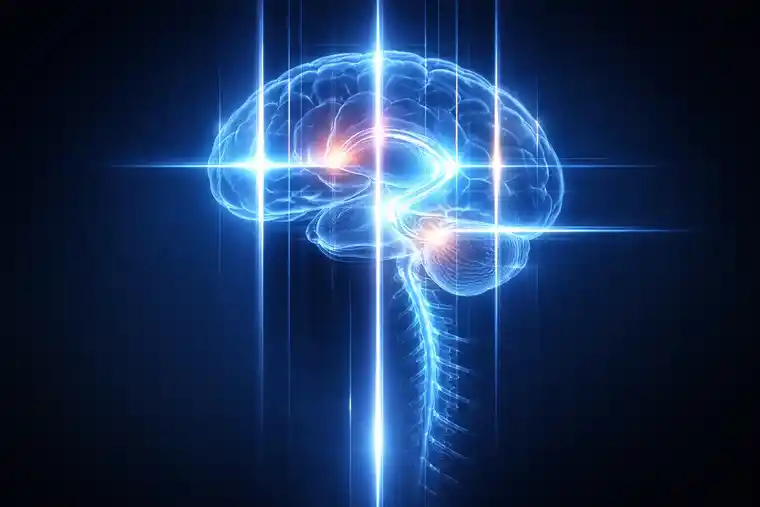
This point is non-negotiable.
Without a recent MRI, no treatment is offered.
MRI is essential to understand:
- whether inflammation is active
- whether new or enhancing lesions are present
- how much structural damage has accumulated
- whether the disease environment is still biologically responsive
Without MRI imaging, treatment decisions become speculative.
Speculative medicine has no place here.
No MRI means no therapy. Without exception.
Why Stem Cell Therapy Is Discussed in Multiple Sclerosis
Stem cell therapy in MS is often misunderstood.
The goal is not to replace neurons.
The goal is not to regenerate the brain.
Mesenchymal stem cells act primarily through biological signaling. They interact with immune cells. They influence inflammatory pathways. They release factors that affect how tissue environments behave.
In MS – particularly in inflammatory phases – this signaling role is the entire rationale.
Some patients ask whether this can “reset” the disease.
That is not how MS behaves.
Exosome Therapy in Multiple Sclerosis: Biological Signaling Rather Than Replacement
Exosomes are small vesicles released by cells. They carry proteins and genetic signals that influence other cells.
- They do not divide.
- They do not engraft.
- They do not form tissue.
What makes them relevant in neurological conditions is their ability to cross the blood–brain barrier and interact with immune cells inside the central nervous system.
- They are not a cure.
- They are not a replacement.
- They are a biological communication tool.
When Regenerative Therapy in MS Reaches Its Biological Limits

There are patients who ask for treatment once progression has clearly taken over.
From a medical point of view, that moment is often already too late.
Not because medicine has failed – but because biology has limits.
Acknowledging those limits is part of honest care.
Which Multiple Sclerosis Patients May Be Considered for Regenerative Therapy
Careful selection is essential.
Patients considered for supportive regenerative therapy typically:
- have a confirmed MS diagnosis
- are in the relapsing-remitting phase
- show MRI evidence of inflammatory activity
- remain symptomatic despite standard treatment
- understand the limits of the approach
Many patients do not meet these criteria.
And that is okay.
Medical Evaluation Required Before Regenerative Therapy in MS
Before treatment is discussed, a structured evaluation is required. This includes neurological history, MRI review, medication assessment, and discussion of expectations.
Only then can a responsible decision be made.
How Regenerative Therapy Is Applied in Clinical Practice
When therapy is considered appropriate, protocols are individualized.
They usually involve intravenous administration of stem cells or exosomes under medical supervision. Procedures are minimally invasive and generally well tolerated.
Safety and Ethical Standards in Regenerative MS Therapy
Responsible regenerative medicine follows strict standards: GMP-certified processing, ethically sourced cells, no embryonic stem cells, no unproven approaches.
Safety always comes first.
What MS Patients May Experience After Regenerative Therapy
Some patients report less fatigue. Some describe better endurance. Others notice little change. Some notice none.
This variability is expected.
Biology does not respond uniformly.
A Clinical Perspective on Regenerative Therapy in Multiple Sclerosis
- Multiple sclerosis is a disease where timing outweighs technique.
- Not every phase can be influenced.
- Not every patient should be treated.
- Not every option should be pursued.
Regenerative medicine, used responsibly, remains selective and supportive.
Used at the right moment, it may help stabilize a system that is still biologically responsive.
Used at the wrong moment, it should not be offered.
Frequently Asked Questions – Stem Cell & Exosome Therapy for MS – Multiple Sclerosis


Stem Cells
Advanced Orthopedic SVF and Exosome Therapy in Istanbul, Turkey
Medical Training
2-Day Regenerative Medicine Training Istanbul 2026 | Stem Cells & Exosomes (ISSCA)
Stem Cells
Knee Osteoarthritis – Non-Surgical Regenerative Treatment with Stem Cells & Exosomes in Istanbul

Stem Cells
COPD – Stem Cell & Exosome Therapy in Istanbul, Turkey
Stem Cells
Femoral Head Avascular Necrosis – Stem Cell Therapy in Istanbul, Turkey
Stem Cells
Dementia – Stem Cell & Exosome Therapy in Istanbul, Turkey
Get your free consultation
- Need guidance and reassurance?
- Talk to a real person from MedClinics!
- Let’s find the perfect doctor together.